


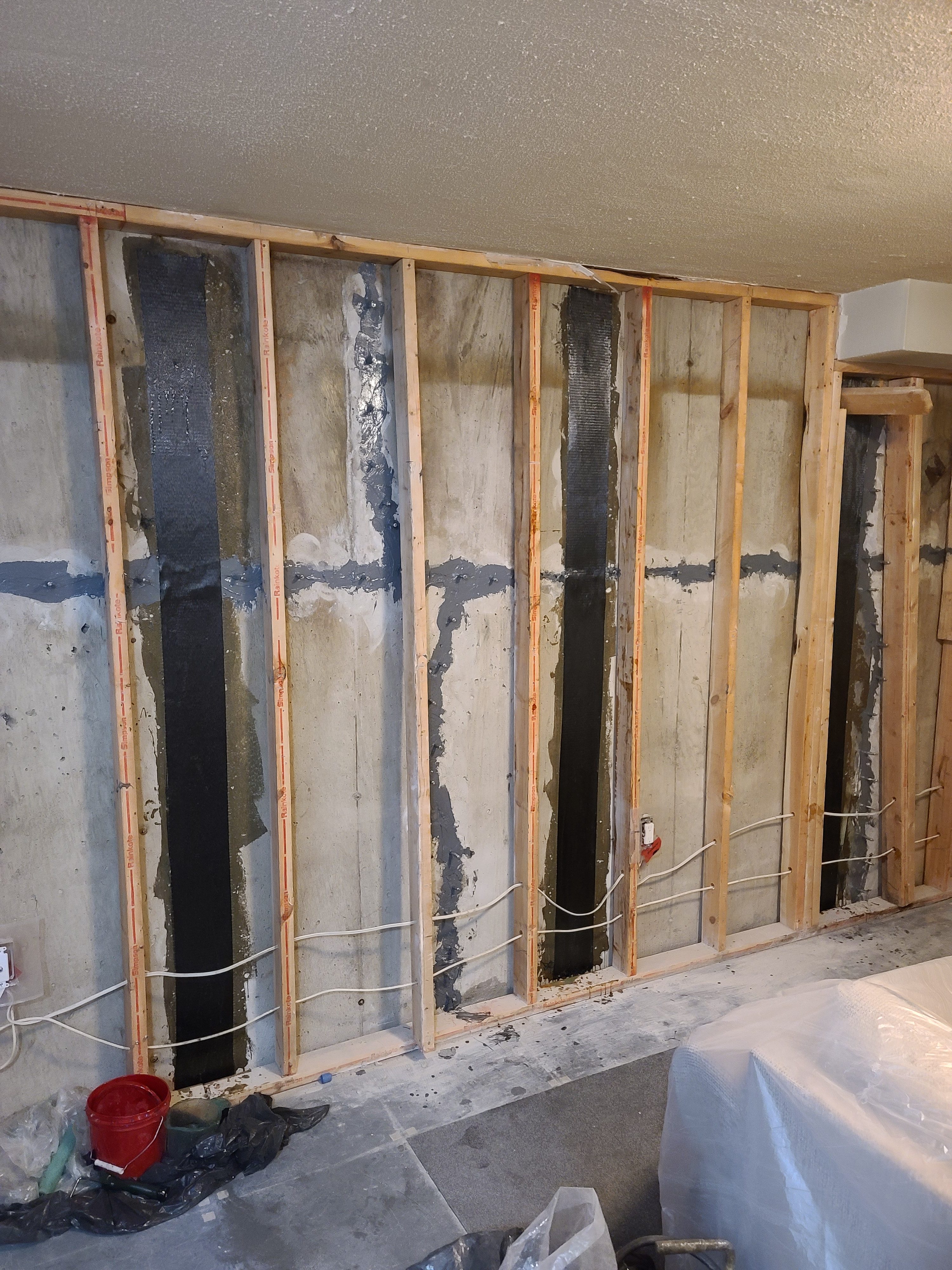
If you own a home in Edmonton, your foundation is fighting a battle every single season — and most homeowners don't know it until a crack appears. Edmonton's clay-heavy ground, brutal freeze-thaw cycles, and spring snowmelt create some of the most relentless foundation stress in Canada. Understanding the risks, warning signs, and repair options could save you tens of thousands of dollars. This guide covers everything.
1. Why Edmonton Homes Face Unique Foundation Risks
Edmonton sits on a thick layer of expansive clay — fine-grained sediment deposited by glacial lakes at the end of the last ice age. This clay behaves dramatically differently from sandy or loamy soils found in other cities: it absorbs water and swells significantly when wet, then shrinks and cracks when it dries. Every seasonal cycle puts new mechanical stress on your foundation.
Compounding the soil problem is Alberta's extreme temperature range. Edmonton regularly experiences winters below −30°C and summers above +30°C — a seasonal swing of more than 60 degrees. Water trapped in the soil and inside hairline cracks in your concrete freezes, expands by approximately 9% in volume, and forces those cracks wider. Come spring, snowmelt saturates the clay and dramatically increases hydrostatic pressure — the force water exerts against your basement walls.
These aren't problems you can design away — they're geological realities every Edmonton homeowner inherits. What matters is catching damage early and using repair methods engineered for Edmonton's specific conditions.
2. Warning Signs You Should Never Ignore
Signs of foundation trouble in Edmonton homes include: horizontal cracks in basement walls, diagonal cracks from window or door corners, bowing or bulging walls, sticking doors or windows, water seepage after rainfall or spring thaw, white chalky residue (efflorescence) on walls, and uneven or sloping floors. If you see any of these, request a free assessment from a licensed Edmonton foundation contractor.
Cracks in Walls or Floors
Any crack wider than 6mm, growing over time, or associated with water entry should be evaluated without delay. Horizontal cracks are the most urgent — they signal lateral soil pressure is overcoming your wall's structural resistance. Vertical hairline cracks are far more common and usually non-structural, but should still be sealed to prevent water infiltration and freeze-thaw widening.
Sticking Doors and Windows
When your foundation shifts, door and window frames shift with it. Doors that suddenly won't close properly, or windows that are hard to open — especially if this appears or worsens seasonally — are a reliable indicator of foundation movement.
Water Seepage and Dampness
Water entering your basement after heavy rain or spring thaw is not simply a drainage nuisance — it is a symptom of hydrostatic pressure finding weak points in your foundation. Left unaddressed, it accelerates crack growth, promotes mould, and degrades structural concrete over time.
Efflorescence (White Chalky Residue)
The white, powdery coating on concrete walls forms when water migrates through the concrete, carries dissolved minerals to the surface, and evaporates. It's a reliable signal that water is moving through your foundation — even when you see no active wet spot.
Uneven or Sloping Floors
Floors that slope noticeably, or gaps appearing between walls and floors, can indicate differential foundation settlement — where the soil beneath the slab is compressing or eroding unevenly beneath different parts of the home.
Call immediately for: horizontal cracks in any basement wall; a sudden increase in crack width; visible wall bowing; active water intrusion during dry weather; or any crack that has grown more than 3mm in a single month. Smart Foundation Solutions offers 24/7 emergency response at (780) 993-1464.
3. How to Read Your Foundation Cracks
Not all foundation cracks are equal. Before calling a contractor, document what you see — photograph the crack with a ruler or coin for scale, measure the width, and note whether it appears to be growing. Here's how professionals classify crack types and what each one likely means for an Edmonton home:
| Crack Type | Typical Appearance | Likely Cause | Severity |
|---|---|---|---|
| Horizontal | Runs parallel to floor, often mid-wall | Lateral soil or hydrostatic pressure pushing inward | High — structural |
| Diagonal / Stair-step | 45° angle, often from door or window corners | Differential settlement, frost heave | Moderate – High |
| Vertical (hairline) | Thin crack, <3mm wide | Concrete curing shrinkage — very common in new homes | Low — seal to prevent water |
| Vertical (wide / growing) | >6mm or actively widening | Settlement, frost pressure, soil movement | Moderate — evaluate promptly |
| Slab / Floor crack | On the basement floor surface | Soil compression or frost heave below slab | Moderate — check for heaving |
| Efflorescence only | White powder, no visible crack | Water migration through porous concrete | Low — waterproof to prevent escalation |
When in doubt, treat the crack as serious until a professional assessment confirms otherwise. Smart Foundation Solutions offers free foundation inspections across greater Edmonton — no obligation, just an honest assessment.
4. Foundation Repair Methods Used in Edmonton
The right repair depends on the type of damage, its severity, and whether water intrusion is involved. Here are the proven techniques used in Edmonton's climate:
Polyurethane Injection
The go-to method for non-structural cracks and active water leaks. Polyurethane resin is injected under pressure into the crack, where it reacts with moisture and expands — in some formulations up to 30 times its original volume — filling every void in the crack path. Once cured, polyurethane remains flexible, tolerating the seasonal thermal movement of Edmonton foundations without re-cracking. Starting from $150/ft at Smart Foundation Solutions.
Epoxy Injection
When structural bonding is the primary goal, epoxy injection restores load-bearing integrity by welding the two sides of a crack back together. Once cured, epoxy is actually stronger than the surrounding concrete. It requires a dry crack surface and is not suitable for actively leaking cracks — polyurethane handles those.
Interior Weeping Tile Systems
Rather than costly exterior excavation, interior weeping tile intercepts groundwater before it can pool against your walls. A perimeter drain channel is installed along the inside of the basement floor and directed to a sump pump. This is often the most cost-effective solution for chronic moisture problems in Edmonton basements, running approximately $80–$130 per linear foot.
Sump Pump Installation
Installed at the lowest point of your basement, a sump pump actively removes groundwater and keeps your basement permanently dry. Battery-backup systems ensure continuous protection during power outages — critical during Edmonton's spring storm season. Professional installation ranges from $1,500–$3,500.
HSS Structural Support Systems
For bowing or leaning foundation walls — most commonly caused by horizontal cracks and lateral soil pressure — Hollow Structural Steel (HSS) support systems are installed inside the basement to stabilize the wall and prevent further inward movement. This is combined with exterior pressure relief for a complete structural solution.
Basement Waterproofing
Advanced rubber polymer coatings applied to basement walls create a continuous moisture barrier. Best combined with proper drainage, waterproofing prevents mould, efflorescence, and long-term concrete degradation. Edmonton foundations should be inspected for waterproofing performance every 10–15 years given the demanding freeze-thaw climate.
5. Foundation Repair Costs in Edmonton (2026)
Foundation repair costs vary based on the type and severity of damage. Here are realistic 2026 price ranges for Edmonton:
| Repair Type | Typical Cost (CAD) | Notes |
|---|---|---|
| Crack injection — polyurethane or epoxy | $150/ft · $600–$1,500 per crack | Depends on crack length, width, and accessibility |
| Structural epoxy injection | $800–$2,500 per crack | For wider structural cracks requiring bonding |
| Interior weeping tile system | $5,000–$15,000 | Depends on basement perimeter length |
| Sump pump installation | $1,500–$3,500 | Higher for battery backup systems |
| HSS structural wall support | $5,000–$15,000+ | Severity and wall length dependent |
| Carbon fibre strap reinforcement | $500–$1,000 per strap | Early-stage bowing walls |
| Full exterior excavation & waterproofing | $20,000–$50,000+ | For severe cases — rarely required when interior options work |
6. How to Protect Your Edmonton Foundation Proactively
Professional repair is essential once problems appear. But preventing damage in the first place is always less expensive than fixing it. Here's what Edmonton homeowners should do:
- Maintain positive grading around your home. The ground should slope away from your foundation at roughly 6 inches of fall over the first 10 feet, directing rainwater and snowmelt away from your walls.
- Extend downspouts at least 6–10 feet from the foundation. Concentrated roof runoff directly against a foundation wall is one of the top causes of basement leaks in Edmonton.
- Never pile snow against foundation walls. This is a common winter habit that dramatically increases spring moisture loading against your concrete.
- Inspect your foundation every spring and fall. These are the seasons when freeze-thaw movement is most visible. Take dated photographs of any cracks to track progression.
- Control basement humidity year-round. Maintain reasonable indoor humidity levels and address condensation on basement walls early — it signals moisture migrating through the concrete.
7. How to Choose the Right Foundation Repair Contractor in Edmonton
Foundation repair is one of the most significant home investments you'll make. Choose your contractor carefully using these criteria:
- Alberta licensing, bonding, and insurance confirmed in writing — never accept verbal assurances. A legitimate contractor provides documentation without hesitation.
- Proven local experience with Edmonton soil and climate — foundation repair is highly regional. Ask how many Edmonton homes they've worked on and how long they've operated locally.
- Lifetime warranty documented in writing — a warranty without written documentation is meaningless. Ask specifically if it transfers to new owners and what conditions void it.
- Written, itemized estimate before any work begins — no verbal quotes, no day-of pressure. Legitimate contractors put everything in writing with line-item pricing.
- Recent local Google and Houzz reviews — look specifically for reviews from the past 12 months from Edmonton homeowners for projects similar to yours.
- Honest, conservative recommendations — a trustworthy contractor recommends the least invasive effective solution, not the most expensive one. Get a second opinion if you feel pressured.
"Smart Foundation Solutions has done amazing work for my family. Gil is always professional and has an incredible work ethic. Highly recommend for anyone dealing with foundation issues in Edmonton." — Hannah Carnat-Gronnerud, Foundation Repair — Edmonton (Google Reviews)
8. Frequently Asked Questions — Foundation Repair Edmonton
Foundation crack injection in Edmonton typically starts at $150 per linear foot. Interior weeping tile systems for a standard basement range from $5,000–$15,000. Structural repairs such as HSS wall bracing or pier systems can range from $5,000 to $20,000+. Smart Foundation Solutions provides free written estimates so you know exactly what to expect before work begins.
Edmonton's expansive clay soil swells when wet and contracts when dry, exerting constant changing pressure on your foundation. Combined with extreme freeze-thaw cycles (−30°C to +30°C seasonal swings), this creates relentless mechanical stress on concrete. Spring snowmelt saturates the clay and dramatically increases hydrostatic pressure against basement walls — forcing water through any available crack or joint.
Yes — horizontal cracks are the most serious type of foundation crack. They indicate lateral soil or hydrostatic pressure is pushing against the wall, potentially compromising structural integrity. If you notice a horizontal crack, even a small one, call a licensed foundation contractor for an assessment right away. Do not wait to see if it grows.
No. Foundation cracks virtually never improve on their own, and most worsen over time due to Edmonton's freeze-thaw cycles and soil movement. Early professional repair is always less expensive than delayed repair — a crack that costs $800 to inject today may require $15,000+ of structural work if ignored for two more winters.
Reputable Edmonton contractors back their work with warranties. Smart Foundation Solutions provides a lifetime warranty on qualifying repairs, fully documented in writing and transferable to future homeowners. When selling your home, a warranty-backed foundation repair is a real estate asset — buyers and home inspectors view it very favourably compared to unrepaired damage.
Smart Foundation Solutions serves all of greater Edmonton and surrounding communities including St. Albert, Sherwood Park, Spruce Grove, Stony Plain, Beaumont, Leduc, Nisku, Fort Saskatchewan, Acheson, and Enoch. Call (780) 993-1464 to confirm service availability in your area.
Ready to Protect Your Edmonton Home?
Get a free, no-pressure assessment from Edmonton's foundation repair specialists. Same-day appointments available for urgent concerns.
📞 Call (780) 993-1464 Request Free Estimate OnlineAbout Smart Foundation Solutions: We are a licensed, bonded, and insured foundation repair company based in Edmonton, Alberta, serving homeowners across greater Edmonton since 2013. With 500+ completed repairs and a lifetime warranty on qualifying work, our mission is to deliver honest, long-term solutions — not patch jobs. Call us at (780) 993-1464 or visit smartfoundationsolutions.ca.