


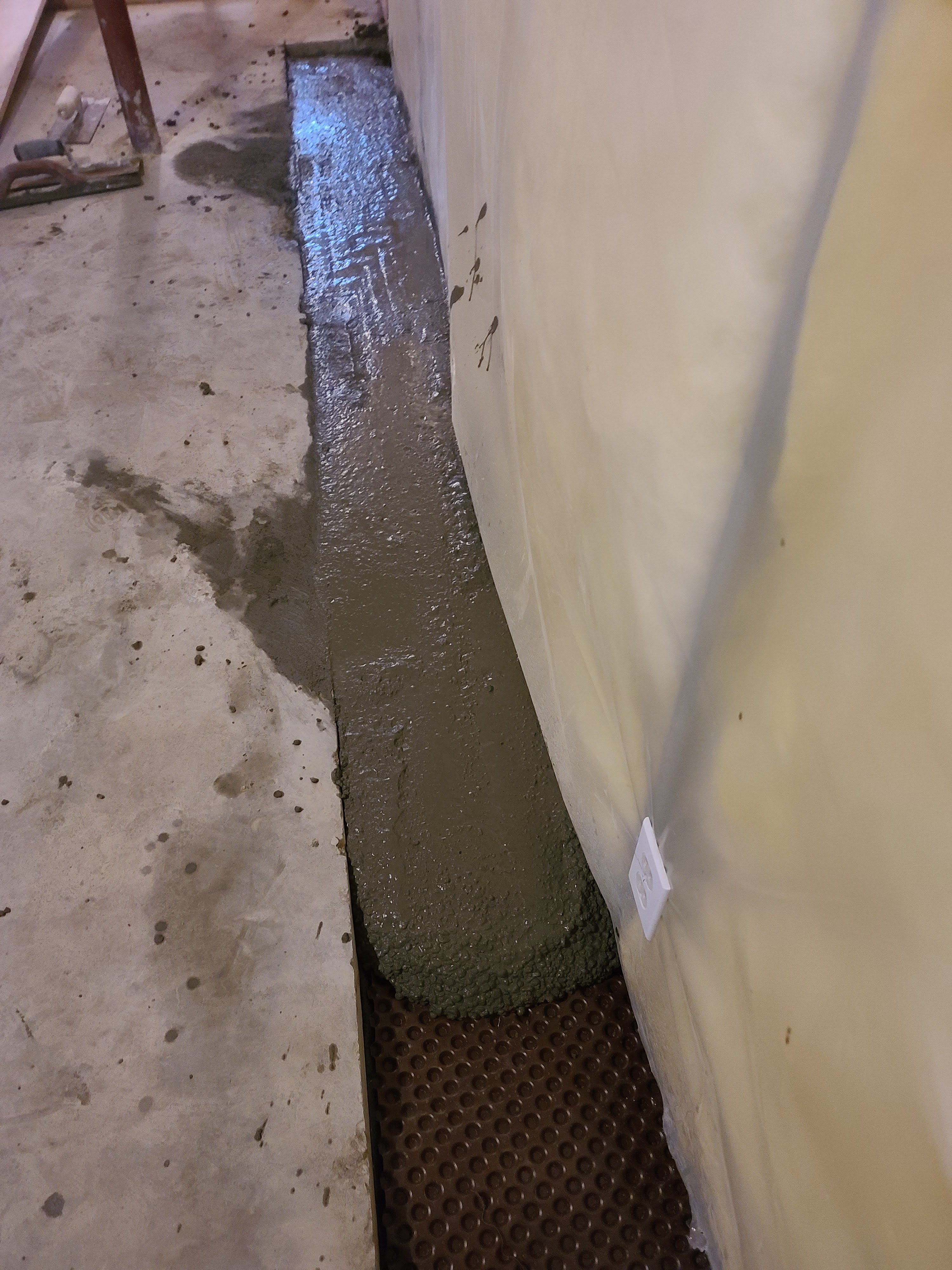
Water in a basement isn't just an inconvenience. In Edmonton, it's the start of mould, rotting framing, ruined finishing, and — if left long enough — compromised foundations. The good news: it's almost always fixable. The challenge is knowing which fix actually works for Edmonton's specific soil and climate, and which ones are band-aids. This is the guide we wish every Edmonton homeowner had before they called anyone.
1. Why Edmonton Basements Are Particularly Vulnerable to Water
Edmonton sits on some of the most expansive clay soil in Western Canada. That clay absorbs water, swells, holds it for weeks after rain stops, and pushes it against your foundation with enormous force. Add dozens of freeze-thaw cycles every winter, and you have a recipe for persistent water infiltration that most standard construction wasn't designed to handle indefinitely. This is why so many Edmonton basements get wet — and why generic solutions from non-local contractors often don't hold.
The Clay Problem Explained
Drive any street in Edmonton and you'll see the effects of clay soil everywhere — lifted sidewalks, cracked driveways, uneven yards. Below grade, that same clay wraps your foundation. When it rains or when spring snowmelt soaks the ground, this clay absorbs water aggressively. It doesn't drain. It holds.
Saturated clay then exerts what engineers call hydrostatic pressure — the weight of water-laden soil pressing against your foundation walls from all sides. This pressure can continue for weeks after the last raindrop, because the clay releases moisture slowly. That's why Edmonton homeowners often see their basements get wet two or three weeks after a rainfall event, long after neighbours with sandy soil are dry.
The Freeze-Thaw Multiplier
Edmonton averages over 130 frost days per year. Every time the ground freezes, moisture in the soil expands by roughly 9% in volume. Every time it thaws, that pressure releases — but not completely back to its starting point. Over ten, twenty, thirty winters, this ratcheting effect progressively works moisture into existing hairline cracks, forces open pores in aging concrete, and widens gaps at the floor-wall joint.
This is why a basement that was dry for twenty years can suddenly start showing water. The concrete didn't change overnight — it's been under attack for decades, and a threshold was finally crossed. Early spring is when Edmonton homeowners most commonly discover new water infiltration, exactly because snowmelt is peaking and the ground has reached maximum frost depth simultaneously.
Edmonton Homes Built Before Modern Standards
Many homes in mature Edmonton neighbourhoods — Glenora, Strathcona, Westmount, Queen Mary Park, Bonnie Doon, and many others — were built decades before modern waterproofing standards existed. Foundations were backfilled with the native clay that was excavated. There was no drainage aggregate, no dimple board membrane, no weeping tile in many cases. Those foundations have been managing clay-soil pressure with almost no drainage assistance for fifty or sixty years. It catches up eventually.
2. Warning Signs Your Edmonton Basement Has a Water Problem
Water infiltration warns you before it becomes catastrophic. Here's what to look for — and how seriously to take each sign:
| Warning Sign | What It Likely Means | Urgency |
|---|---|---|
| White chalky deposits on walls (efflorescence) | Mineral salts left behind as water evaporates through concrete — water has been moving through your walls for some time | MODERATE — Within 1–3 Months |
| Damp or wet patches on basement walls | Active water infiltration through porous concrete or at cracks | MODERATE — Within Weeks |
| Water at or near the floor-wall joint | Hydrostatic pressure pushing water through the cove joint — the #1 water entry point in Edmonton basements | URGENT — Address Promptly |
| Standing water on the floor after rain or snowmelt | Active infiltration — could be cove joint, floor crack, window well, or wall penetration | URGENT — Address Promptly |
| Musty or earthy smell with no visible water | Hidden moisture behind drywall or under flooring — mould may already be present | MODERATE — Investigate Within 2–4 Weeks |
| Peeling paint or bubbling on basement walls | Moisture trapped beneath a painted surface — water is moving through the wall | MODERATE — Within 1–3 Months |
| Rust stains on floor around sump pit | Sump pump overworking or failing — a warning before a pump failure floods the basement | MODERATE — Inspect Immediately |
| Water through window wells after rain | Window well drainage failure — relatively straightforward to fix | LOW — Within 1–2 Months |
| Cracks in foundation walls or floor | Potential water entry pathway; may also indicate structural concern depending on crack type | URGENT — Assess Promptly |
| Rusted or corroded metal in the basement | Long-term chronic moisture — environment is humid enough to corrode metal, which means it's humid enough to grow mould | MODERATE — Within Weeks |
Water in a basement that appears once a year or only during heavy rain is still actively working against your foundation, your framing, and your indoor air quality. The damage accumulates even when you're not watching. Intermittent water infiltration is not a sign that the problem is minor — it's a sign that the problem is slow.
3. Where Water Actually Gets Into Edmonton Basements
A critical step in fixing a wet basement is identifying where water is entering — because the right solution depends heavily on the entry point. Here are the most common sources we find in Edmonton homes:
The Cove Joint (Floor-Wall Junction)
This is the number one water entry point in Edmonton basements, by a wide margin. The cove joint is where the floor slab meets the foundation wall. In most Edmonton homes, this joint is not sealed — it's a natural gap that opens slightly as the foundation settles and as freeze-thaw cycles cause seasonal movement. Hydrostatic pressure from water-saturated clay pushes water through this gap from below and from the side simultaneously.
Water at the base of your walls — even if you see it running down the wall — often originates at the cove joint, not through the wall itself. This distinction matters enormously for selecting the right repair.
Through-Wall Cracks
Vertical hairline cracks are common in poured concrete foundations and often occur during the normal curing process. They aren't automatically structural concerns, but they are pathways for water. As freeze-thaw cycles work moisture into these cracks over time, they widen. Polyurethane foam injection is the standard solution — it seals the crack against water while maintaining flexibility to handle the seasonal movement that caused the crack in the first place.
Porous or Deteriorating Concrete
Concrete is not waterproof. Over time — especially in Edmonton's alkaline clay environment — the outer face of foundation walls can deteriorate and become more porous. Water seeps through the wall face as a fine mist or damp patch, not through any specific crack. This is often visible as widespread efflorescence or general dampness across the interior face of the wall.
Floor Slab Cracks
Cracks in the basement floor allow water to seep upward under hydrostatic pressure. This is most common in homes built on clay that has experienced seasonal heave — the floor cracks as the slab flexes. Water coming up through floor cracks is a reliable indicator that water pressure beneath the slab is significant.
Window Wells
Basement window wells that fill with water direct it straight against the foundation near window penetrations. Poorly designed wells without drainage gravel or an intact drain can funnel significant water quantities against the wall with every rain event. This is one of the more straightforward fixes — but it's frequently overlooked.
Pipe Penetrations and Utility Entries
Every place a pipe, conduit, or utility entry passes through the foundation wall is a potential water entry point, especially as sealants age and crack. These are relatively easy to identify and seal but are often missed during basic inspections.
4. Every Basement Waterproofing Method — Explained Honestly
There are two primary approaches to basement waterproofing in Edmonton: interior waterproofing, which manages water after it enters the wall system (perimeter drainage channel + sump pump), and exterior waterproofing, which prevents water from reaching the foundation in the first place (excavation, drainage membrane, weeping tile). Interior systems are more affordable and sufficient for most Edmonton homes. Exterior waterproofing is more comprehensive but significantly more expensive, and is indicated for severe hydrostatic pressure or structural concerns. Crack injection is used for isolated crack sealing regardless of approach.
A perimeter drainage channel is installed at the base of the foundation walls (at or below the footing level), capturing water that enters through the cove joint and wall before it reaches the floor. Water is directed to a sump pit and pumped out of the basement. This system works with Edmonton's hydrostatic pressure environment rather than against it.
Best for: Most Edmonton homes with cove joint or wall seepage · Backed by lifetime warranty
The working heart of any interior drainage system. A properly sized, quality sump pump — with a battery backup — is non-negotiable in Edmonton's high-hydrostatic-pressure environment. Power outages during spring storms (when pumps are working hardest) are exactly when you need backup power. Undersized or old pumps fail when you need them most.
Best for: Any home with an interior drainage system · Essential with battery backup
Polyurethane foam is injected into a crack under low pressure, expanding to fill the crack completely and forming a flexible, waterproof seal. Unlike rigid epoxy, polyurethane maintains flexibility — allowing for the seasonal movement Edmonton's foundations experience without re-cracking. It works in wet conditions, making it suitable for actively leaking cracks.
Best for: Isolated vertical hairline cracks leaking water
The foundation wall is excavated to footing level, the existing deteriorated waterproofing membrane is removed, and a new drainage membrane (dimple board or rubberized coating) is applied. New weeping tile and drainage aggregate are installed. This completely addresses the root cause of hydrostatic pressure and is the most permanent solution available.
Best for: Severe hydrostatic pressure · Structural horizontal cracks · Complete peace of mind
Installation of proper drainage gravel in the window well, a functional drain connected to the weeping tile system or a dry well, and replacement of deteriorated window well covers. Straightforward and cost-effective when window wells are the identified entry point. Often overlooked but significant in older Edmonton homes.
Best for: Homes where window wells are the primary entry point
Correcting negative grade (ground sloping toward the house) reduces surface water directing against the foundation. This should be done alongside any waterproofing work, but it is not a substitute for it. On clay soils, even perfectly graded lots have hydrostatic pressure from groundwater — grade correction alone rarely fully resolves a wet basement on Edmonton clay.
Best for: Complementary measure alongside waterproofing — not a standalone solution for clay soils
Hydraulic cement and crystalline waterproofing coatings applied to the interior wall face are widely available at home improvement stores. They can temporarily reduce seepage through porous walls but do not address hydrostatic pressure at the cove joint — the primary entry point for most Edmonton basements. These products are best used as a supplementary measure, not a primary waterproofing solution. On their own, they are insufficient for Edmonton's clay-soil hydrostatic pressure conditions.
5. Interior vs. Exterior Waterproofing: Which One Does Your Home Need?
This is the question we get asked most often, and the honest answer is: it depends on what's driving your water problem. Here is a straightforward comparison to help you understand the tradeoffs:
| Factor | Interior System | Exterior Waterproofing | Crack Injection |
|---|---|---|---|
| Addresses root cause | Partially — manages water after entry | Yes Fully — prevents water reaching the wall | For isolated cracks only |
| Effective for cove joint leaks | Yes Yes — designed for this | Yes Yes | — No |
| Works with Edmonton clay pressure | Yes Yes | Yes Yes | For specific cracks |
| No excavation required | Yes Interior work only | — Requires full excavation | Yes Interior work only |
| Addresses structural concerns | — Waterproofing only | Yes, with HSS/structural work | Epoxy only, for dry cracks |
| Disruption to yard / landscaping | Yes None | — Significant — full excavation | Yes None |
| Typical Edmonton cost | $6,000–$15,000 | $20,000–$60,000+ | $500–$1,500 per crack |
| Lifetime warranty available | Yes Yes (Smart Foundation Solutions) | Yes Yes | Yes Yes on qualifying work |
Our honest recommendation: For the vast majority of Edmonton homeowners dealing with wet basements — particularly cove joint seepage, moderate wall seepage, or water after rain — a properly installed interior drainage system with a battery-backup sump pump is the right solution. It's proven, warrantied, and cost-effective for Edmonton conditions.
Exterior waterproofing is the right choice when: there is significant horizontal cracking indicating structural wall failure and the cause needs to be eliminated at source; the home is undergoing a major renovation that already involves excavation; or the homeowner wants the most comprehensive solution available regardless of cost.
6. Sump Pumps: The Most Important Device in Your Basement
A sump pump is not optional in an Edmonton home with an interior drainage system. It is the entire system. If the pump fails, the basement floods. Here's what Edmonton homeowners need to know:
What Makes a Good Sump Pump Installation
- Correct sizing: An undersized pump can't keep up with spring snowmelt and heavy rainfall. We size pumps based on the basement perimeter, soil conditions, and historical water volume.
- Quality pump brand: Not all sump pumps are equal. We use professional-grade submersible pumps built for continuous duty cycles — not the entry-level units from box stores that may run only seasonally.
- Battery backup system: Edmonton's worst weather and power outages frequently coincide. A battery backup unit means that if grid power goes out during a spring storm, your pump keeps running — and your basement stays dry.
- Proper discharge routing: The discharge line must exit well away from the foundation and terminate in a location that won't allow water to migrate back toward the house.
- Sealed sump pit lid: A sealed lid prevents radon, humidity, and odour from entering the basement from the pit.
- Check valve on discharge line: Prevents water from running back into the pit when the pump stops, eliminating unnecessary short-cycling.
- Annual test and inspection: Pour water into the pit to verify the pump activates correctly. Test the battery backup. Clean the pit of debris. Takes 10 minutes and can prevent a basement flood.
"The crew was professional, efficient, and explained every step of what they were doing. They installed a full perimeter drainage system and sump pump. We had a major rain event three weeks later — not a drop in the basement. First time in four years. Cannot recommend them enough." — Verified Edmonton Homeowner, Bonnie Doon neighbourhood · Google Reviews
7. Basement Waterproofing Costs in Edmonton (2026)
We're going to give you real numbers here — not deliberately vague ranges designed to get you on the phone. These are honest 2026 Edmonton market costs. Every project is different, but these ranges cover the vast majority of situations we see.
| Service | 2026 Cost Range (CAD) | Notes |
|---|---|---|
| Interior drainage system (full perimeter) | $6,000–$15,000 | Depends on basement perimeter length and access. Includes sump pit installation. |
| Interior drainage (partial — problem area only) | $3,000–$7,000 | For homes where water infiltration is localized to one or two walls. |
| Sump pump installation (new system) | $1,200–$2,500 | Includes pump, pit, lid, discharge line. Quality submersible unit. |
| Sump pump replacement | $600–$1,400 | Existing pit in place; pump only replacement. |
| Battery backup sump pump | $400–$900 (add-on) | Added to any new or existing installation. Essential in Edmonton. |
| Polyurethane crack injection | $500–$1,500 per crack | Per crack; multiple cracks discounted. Works on wet cracks. |
| Window well installation with drainage | $500–$1,500 per well | Includes drainage gravel and drain connection where possible. |
| Exterior waterproofing (targeted section) | $2,500–$6,000 per section | Targeted exterior work on a single wall or section. Less invasive than full perimeter. |
| Exterior waterproofing (full perimeter) | $20,000–$60,000+ | Full excavation, membrane, drainage board, weeping tile replacement. For severe cases. |
One basement flood event in Edmonton — requiring professional water extraction, mould remediation, and replacement of finished flooring and drywall — typically costs $15,000–$40,000+. One event. That's before considering the long-term impact on your home's value and the ongoing damage to air quality from chronic moisture. Waterproofing is an investment. The risk of not doing it is typically far greater than the cost of the solution.
8. Mould, Air Quality, and What a Wet Basement Is Doing to Your Home Right Now
Most Edmonton homeowners are aware that water in a basement is bad. Fewer understand just how quickly a damp basement becomes a health and structural problem — even without visible standing water.
The Mould Timeline
Mould can begin growing on wet organic materials — wood framing, drywall paper, carpet padding — within 24 to 48 hours of water exposure. Chronic low-level moisture in a basement doesn't cause the dramatic single-event mould bloom, but it creates conditions where mould grows slowly and persistently behind finished surfaces, in wall cavities, and under flooring. It can be present for years before it's visible.
The Stack Effect: Your Whole House Breathes Basement Air
A phenomenon called the stack effect means your home draws air upward from the basement through natural convection — particularly in winter. Studies suggest that 30–60% of the air in upper floors of many Canadian homes originated in the basement. A mouldy basement isn't a sealed-off problem. Its air quality problem is your whole-house air quality problem.
Structural Damage from Chronic Moisture
Wood framing in direct or intermittent contact with moisture experiences decay over years. Floor joists sitting on a damp sill plate — even without standing water — can soften, crack, and lose structural capacity. This is the kind of damage that starts as a slight bounce in the floor above the basement and ends as a structural repair bill rather than a waterproofing bill. Dry your basement before that conversation becomes necessary.
9. How a Wet Basement Affects Your Edmonton Home's Value
Real estate in Edmonton moves quickly, but foundation and basement moisture issues are among the most reliable ways to stop a sale cold at the inspection stage. Here's the reality of how water problems affect value:
Conversely, a basement that is dry, professionally waterproofed, and backed by a transferable lifetime warranty is a genuine selling point. It removes one of the largest uncertainties a buyer and their inspector face, and it demonstrates that the home has been properly maintained. Buyers and their agents know the difference between a DIY fix and a warranted professional system.
The financial case for waterproofing before listing is straightforward: in most Edmonton markets, a $7,000–$12,000 interior waterproofing investment protects against a $20,000–$40,000 price reduction and prevents a failed deal. And if you're not selling, the peace of mind and health benefits are their own return on investment.
10. Basement Waterproofing Across Greater Edmonton & the Capital Region
Smart Foundation Solutions provides basement waterproofing services across Edmonton and all surrounding communities. Our crews work across the Capital Region every week — we know the soil conditions, neighbourhood age patterns, and specific challenges in each area.
Call (780) 993-1464 to confirm service availability in your specific area or to book a free assessment. Same-day response available throughout greater Edmonton.
11. How Smart Foundation Solutions Approaches Every Waterproofing Job
We've been doing this in Edmonton since 2013 and have waterproofed over 500 homes across the Capital Region. Here is exactly what to expect when you work with us:
-
Free assessment — interior and exterior, no skipping steps. We inspect the full basement interior: walls, floor, cove joint, existing sump system, any finished areas. Then we look outside: lot grading, downspout discharge, window wells, foundation exposure. Many competitors skip the exterior. We don't, because that's often where the cause lives.
-
We identify where the water is actually coming from. We don't sell you a waterproofing system first and diagnose second. We find the entry point — whether that's the cove joint, a specific crack, window wells, or something else — and recommend the solution that actually addresses that source.
-
Written estimate explaining everything. You get a clear, itemized written estimate in plain language. No verbal promises that evaporate after you sign. No surprise add-ons when the crew shows up. What's written is what you pay.
-
Professional installation using Edmonton-proven systems. We use systems and materials that perform in Alberta's clay-soil, freeze-thaw environment — not generic solutions imported from markets with different soil conditions and different climates.
-
Lifetime transferable warranty documentation. Every qualifying installation is backed by our lifetime warranty, in writing, fully transferable to the next homeowner when you sell. This is the document that reassures buyers, their agents, and their lenders.
-
Post-installation guidance on protecting your investment. We tell you what to monitor, how to test your sump pump, how to manage grading and downspouts, and what to do if you ever see water again. Because our job isn't just the installation — it's making sure you stay dry.
"We had three quotes before calling Smart Foundation Solutions. They were the only company that came in, looked at both the inside and outside of the foundation, and actually told us what was causing the problem before trying to sell us anything. The system they installed has been completely dry through two spring thaws. Zero issues. Real professionals." — Verified Edmonton Homeowner, St. Albert · Google Reviews
12. Frequently Asked Questions — Basement Waterproofing Edmonton
For most Edmonton homes, an interior drainage system combined with a quality sump pump is the most reliable and cost-effective long-term solution. It's engineered to handle Edmonton's clay-soil hydrostatic pressure conditions — the primary driver of wet basements here — and it works regardless of how severe the pressure becomes. Exterior waterproofing is more comprehensive but significantly more expensive, and is typically indicated for homes with severe horizontal cracking or structural wall movement. Crack injection is used for isolated crack sealing as a complementary measure.
In 2026, interior drainage system installation in Edmonton typically costs $6,000–$15,000 for a full perimeter system. Sump pump installation alone runs $1,200–$2,500. Crack injection (polyurethane) costs $500–$1,500 per crack. Exterior excavation waterproofing — the most comprehensive solution — ranges from $20,000–$60,000+ for a full perimeter treatment. Partial interior drainage (one or two walls) typically costs $3,000–$7,000. All prices are Edmonton market rates as of 2026 and vary by project scope, basement size, and specific conditions.
This is a textbook symptom of hydrostatic pressure in Edmonton's clay soil. Clay absorbs and retains water for weeks after rainfall, continuing to push it against your foundation long after the surface has dried. If your basement gets wet days or weeks after rain stops, the problem is water-saturated clay exerting sustained pressure — not just surface drainage. Improving lot grading alone will not fully resolve this. An interior drainage system is designed specifically to manage this kind of sustained subsurface pressure.
Yes — a properly installed interior drainage system with a quality sump pump is a permanent, warrantied solution for managing water infiltration in Edmonton basements. It doesn't stop water at the exterior face of the foundation, but it captures water at the footing level and removes it before it can damage your basement. When installed correctly with a battery backup sump pump, it performs reliably for decades. Smart Foundation Solutions backs all qualifying interior drainage systems with a lifetime transferable warranty.
Surface-applied sealants and hydraulic cement from hardware stores are widely available, and they can slow minor seepage through porous walls. However, they do not address the hydrostatic pressure at the cove joint — which drives the majority of wet basement problems in Edmonton. In our experience, DIY waterproofing attempts in Edmonton clay-soil conditions typically delay the real solution by a year or two, during which water continues to damage framing, flooring, and air quality. By the time a professional is called, the total cost — including remediation of DIY-related damage — is usually higher than if the proper solution had been installed initially.
Yes, significantly. A dry basement with a professional installation and a transferable lifetime warranty is a strong positive in Edmonton real estate. It removes one of the largest concerns home inspectors and buyers have, and it gives lenders confidence. Evidence of moisture or unresolved water infiltration can reduce sale prices by $15,000–$40,000 or cause deals to fall through at the inspection stage. Waterproofing investment typically delivers a strong return, both in resale value protection and in preventing the far more expensive consequences of ongoing water damage.
The cove joint — the junction where the basement floor slab meets the foundation walls — is the most common water entry point in Edmonton basements. Hydrostatic pressure from water-saturated clay pushes water through this joint from below and from the side simultaneously. Many homeowners see water running down their walls and assume the leak is in the wall itself; in a majority of cases, the actual entry point is at the floor-wall joint. An interior drainage system is specifically designed to capture water at this location and remove it before it reaches the floor surface.
Smart Foundation Solutions provides basement waterproofing throughout greater Edmonton and surrounding communities including St. Albert, Sherwood Park, Spruce Grove, Stony Plain, Beaumont, Leduc, Nisku, Fort Saskatchewan, and Enoch. Free assessments are available throughout the service area. Call (780) 993-1464 to confirm availability and book your inspection.
A Dry Basement Starts with a Free Assessment
We inspect, diagnose, and explain exactly what's causing your water problem — no jargon, no pressure. Then you decide. Serving all of greater Edmonton and the Capital Region.
Call (780) 993-1464 Request Free Estimate Online
About Smart Foundation Solutions: Edmonton's basement waterproofing and foundation repair specialists since 2013. Interior drainage systems, sump pump installation, exterior waterproofing, polyurethane crack injection, and HSS structural support for Alberta homes. 500+ waterproofing and repair projects completed across greater Edmonton, St. Albert, Sherwood Park, Spruce Grove, Stony Plain, Beaumont, Leduc, Fort Saskatchewan, and surrounding areas. Lifetime warranty on qualifying work. Licensed, bonded, and insured in Alberta.
Call (780) 993-1464 ·
Web: smartfoundationsolutions.ca ·
Address: 211 Wahstao Rd NW, Edmonton, AB T5T 2X8 ·
Hours: Mon–Sun 8:00 AM – 9:00 PM